
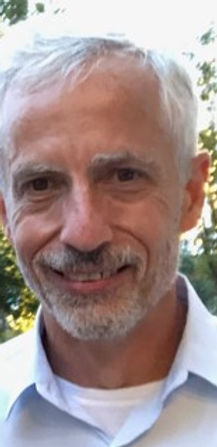
Eric Jacobsen was born in New York City of Cuban parents and was raised in lower Manhattan and Queens. He graduated from New York University in 1982 with a B.S. in Chemistry. At NYU he was introduced to research by Yorke Rhodes. His Ph.D. work was done at U.C. Berkeley in the area of mechanistic organometallic chemistry under the direction of Robert Bergman. In 1986, he returned to the East Coast of the U.S. for an NIH postdoctoral fellowship with Barry Sharpless at MIT, where he participated in the early development of the asymmetric dihydroxylation reaction. In 1988, he began his independent career at the University of Illinois. He moved to Harvard University as full professor in the summer of 1993. He was named the Sheldon Emory Professor of Organic Chemistry in 2001, and served as Chair of the Department of Chemistry and Chemical Biology between 2010 and 2015. In 2024 Eric became Associate Editor for JACS. The Jacobsen research group is dedicated to discovering selective catalytic reactions, and to applying state-of-the art mechanistic and computational techniques to the analysis of those reactions. Several of the catalysts developed in his labs have found widespread application in industry and academia. These include metal-salen complexes for asymmetric epoxidation, conjugate additions, and hydrolytic kinetic resolution of epoxides; chromium-Schiff base complexes for a wide range of enantioselective pericyclic reactions; and organic hydrogen-bond-donor catalysts for activation of neutral and ionic electrophiles. The Jacobsen group’s mechanistic analyses of these systems have helped uncover general principles for catalyst design, including electronic tuning of selectivity, cooperative homo- and hetero-bimetallic catalysis, privileged catalysis, hydrogen-bond donor asymmetric catalysis, and anion-binding catalysis. The recognitions Eric has received include the Arthur C. Cope Medal and Roger Adams Award of the American Chemical Society, the Welch Prize, the Tetrahedron Prize, the Chirality Medal, and elections to the U.S. National Academy of Sciences and the American Academy of Arts and Sciences.