
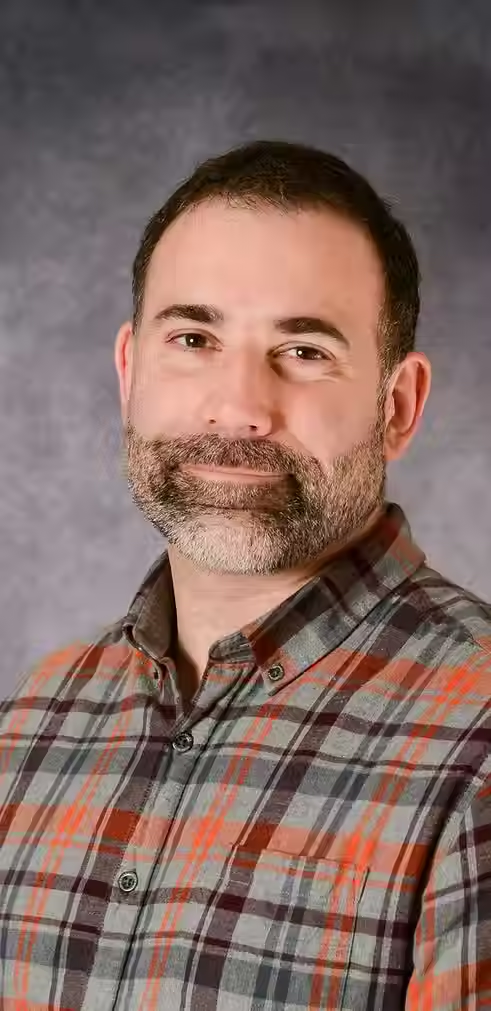
Erik Alexanian is a Professor of Chemistry at UNC Chapel Hill, where his group builds new reaction methods aimed at two pretty different but connected problems, making complex small molecules for medicine and turning post-consumer plastic waste into something more valuable. He started out at Harvard, finishing his A.B. in Chemistry in 2001 with undergrad research in the Hoveyda lab at Boston College. He then went to Princeton for his PhD with Erik Sorensen, working on the total synthesis of the furanosteroid viridin along with new metal-catalyzed alkene chemistry, and finished in 2006. From there he spent two years as an NIH postdoctoral fellow with John Hartwig, first at Yale and then at the University of Illinois at Urbana-Champaign when the Hartwig group relocated, studying transition metal enolates and the mechanisms behind them. The research program he has built at UNC sits squarely on late-stage C to H functionalization, with the same logic applied at two very different scales. On the small molecule side, the group develops radical and transition metal catalyzed methods to functionalize unactivated aliphatic C to H bonds, which is the kind of chemistry that lets medicinal chemists tweak a drug candidate at a position no one used to be able to touch. On the polymer side, they take the same C to H activation playbook and aim it at commodity plastics, in close collaboration with Frank Leibfarth at UNC. The idea is to install new functional groups directly onto polyolefin backbones, which opens the door to upcycling instead of downcycling and gives plastic waste real chemical value.